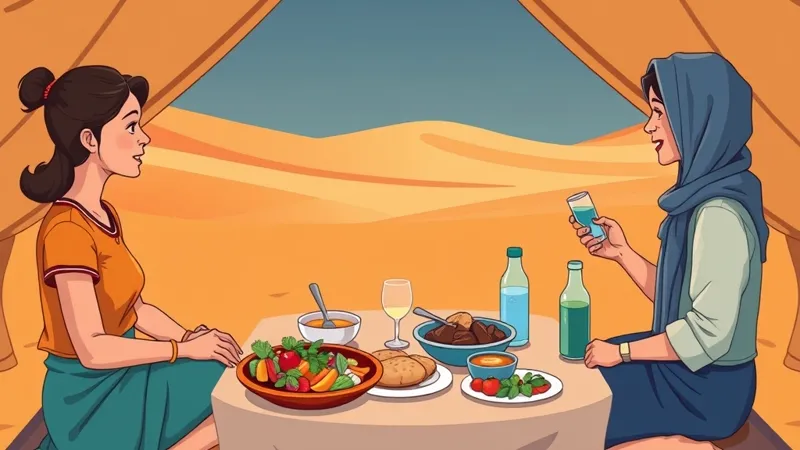
Many multi-day Marrakech–Merzouga packages include breakfasts and dinners at overnight accommodation, while lunches, drinks and snacks are often extra. The individual listing determines your inclusions. Possible meals include tagine, soup, bread, salads and couscous, but there is no fixed menu shared by every hotel or desert camp.
Vegetarian, vegan, gluten-free and allergy requirements need written confirmation before booking, covering every overnight property rather than just the camp. A vegetable dish is not necessarily vegan, and removing bread does not make a meal safe for someone with celiac disease.
Via Sahara is an independent editorial and affiliate comparison guide, not a tour operator or the camp preparing your meals. This guide explains what to ask; acceptance of a dietary requirement must come from the actual provider.
Which meals and drinks are included in a Marrakech to Merzouga tour?
Breakfast and dinner are common inclusions on multi-day packages, but lunch and drinks frequently remain separate. Half board normally means breakfast and dinner, not every meal, unlimited water or drinks with dinner.
Use this inclusion comparison alongside the selected listing:
- Breakfast — Common arrangement: provided at overnight accommodation. Confirm: which mornings, serving times and whether an early departure means a packed breakfast instead.
- Lunch — Common arrangement: paid separately at roadside restaurants. Confirm: whether any lunch is included, how stops are chosen and whether alternatives are available.
- Accommodation dinner — Common arrangement: included at the first overnight hotel or guesthouse on a half-board package. Confirm: the property, drinks policy and dietary acceptance.
- Camp dinner — Common arrangement: included with the Erg Chebbi overnight stay. Confirm: the menu format, shared serving arrangements and any supplements.
- Drinking water — Common arrangement: variable; provision in the vehicle does not establish provision at camp. Confirm: where water is supplied, whether it is included and where more can be obtained.
- Mint tea — Common arrangement: sometimes offered on arrival. Confirm: whether it is complimentary and whether additional servings are charged.
- Other drinks — Common arrangement: soft drinks, juice, coffee outside breakfast and any alcoholic drinks may be extra. Confirm: availability and payment arrangements.
Roadside restaurants, overnight hotels and dune camps are separate food-service settings. A promise from one does not automatically cover the others.
Illustrative three-day, two-night meal pattern
This is an example of the sequence, not a verified package or meal count:
- Day one: depart Marrakech, stop for lunch en route, then eat dinner at the first overnight property.
- Day two: breakfast at that property, another roadside lunch, then arrival refreshments and dinner at the desert camp.
- Day three: breakfast before leaving the desert area, followed by a lunch stop during the onward or return journey.
Only count meals as included when the selected listing explicitly lists them. The three-day Marrakech–Merzouga comparison helps frame that comparison; live prices and ratings belong in the GetYourGuide widgets on tour pages, not static estimates here.
What is served at a Berber dinner in an Erg Chebbi desert camp?
“Berber dinner” is a common booking term associated with Amazigh hospitality, not a standardized menu. An Erg Chebbi camp dinner menu might feature soup, bread, a meat or vegetable tagine and fruit, with couscous appearing at some properties or on some evenings.
Ingredients and serving styles vary by camp, season and regional practice. Ask whether meat and vegetables are cooked separately, whether sauces contain stock and whether dishes are shared. A vegetable portion lifted from a meat tagine does not meet a vegetarian request.
Couscous has a broader cultural significance reflected in UNESCO’s entry on the knowledge and practices surrounding its production and consumption. That recognition concerns cultural heritage; it does not certify any camp’s cooking, hygiene or menu.
Medfouna, a stuffed bread associated with the surrounding region, may be worth asking about, but it should not be treated as a guaranteed tour inclusion. Likewise, a higher accommodation category does not by itself establish better dietary controls. Basic camps on budget tours may offer less menu choice; confirm rather than infer.
When do you eat during the drive and the overnight desert stay?
Meals generally follow departure, roadside stops and accommodation arrival, rather than a fixed restaurant schedule. Route choices, daylight, transfers and activities can all move lunch or dinner later than expected.
As a broad route reference, Marrakech to Merzouga is roughly 560 km, about 9–10 hours by road, over the Tizi n’Tichka pass at 2,260 m. This is not a timed itinerary for every sightseeing route. Driving time differs from total travel time, which also includes breaks, visits and meals.
Ask the provider for a sourced road-distance range in kilometres and a driving-time range for its precise route, with stops excluded from wheel time. Establish whether the first overnight is in the Dades area or somewhere else; that changes the following day’s meal and arrival pattern. Consult the Marrakech-to-Sahara transport guide for broader planning context.
On departure day, eat before pickup unless breakfast is explicitly arranged. Roadside lunch may fall later than your usual mealtime. On the desert-arrival day, tea or another refreshment may precede dinner, but should not be assumed to replace a meal.
For a camel transfer, your main luggage may travel separately or remain elsewhere. Keep suitable snacks, necessary medication and drinking water in the bag you can access. Confirm breakfast timing before sunrise activities or an early return transfer, particularly when travelling with children or managing a medical dietary need.
Can vegetarians and vegans eat well on a Sahara desert tour?
Vegetarian and vegan meals may be possible, but they are different requests and should be confirmed separately. Ask for actual meal examples across the itinerary rather than accepting “vegetarian options available” as a complete answer.
For vegetarian meals, ask about vegetable tagines, lentils, chickpeas and whether eggs or dairy are available if you eat them. For vegan meals, specify no meat, fish, eggs, dairy, butter or honey, and request breakfast alternatives as well as dinner.
A vegetable dish may contain meat stock or animal fat. Couscous toppings, soups, sauces and bread all need ingredient checks. Ask for a substantial meal, such as vegetables with confirmed plant-based pulses, rather than assuming salad and bread will be sufficient.
Copy and adapt this message:
I need fully plant-based meals, with no meat, fish, meat stock, animal fat, eggs, dairy, butter or honey. Please confirm suitable breakfast and dinner options with every overnight property, including the desert camp. What meals can each property provide? Can the lunch restaurants accommodate the same requirement, and what alternatives are available if they cannot?
Send the request before payment and retain the reply. Reconfirm when the itinerary or accommodation changes. A driver knowing your preference is useful, but the kitchens preparing your food also need it.
How should you arrange gluten-free meals and manage food allergies?
Gluten-free meals require ingredient and preparation checks, while severe allergies require an explicit assessment of whether the provider can accommodate you safely. Neither should be handled as a simple request to remove an item from the plate.
Ordinary wheat couscous and wheat bread contain gluten. Soups, sauces, seasoning mixes and shared utensils also need checking. The NIDDK guidance on eating with celiac disease explains the gluten-free diet and the importance of avoiding cross-contact.
Clearly distinguish a preference, an intolerance, celiac disease and a potentially life-threatening allergy. State the relevant ingredients and ask:
- Can the kitchen check every ingredient, including packaged seasonings and stock?
- Can it use separate utensils, preparation surfaces and cooking equipment where needed?
- How will it prevent cross-contact during preparation and serving?
- Can each accommodation safely meet the requirement, or should you choose another arrangement?
For allergy preparation, consult Food Allergy Research & Education’s travel resources. Follow your clinician-provided emergency plan, carry prescribed medication accessibly and discuss remote travel with your clinician when appropriate.
A vague “no problem” reply is not a safety guarantee, especially where emergency care may be distant. If the provider cannot explain its controls or verify ingredients, do not treat the meal as safe. Bringing backup food also requires a realistic plan for the whole journey, including storage.
What should you know about drinking water, food hygiene and packed snacks?
Plan for a reliable safe-water supply and choose foods that have been safely prepared and stored. Tea on arrival does not replace drinking water throughout the drive, activities and overnight stay.
Check seals on commercially bottled water. If treated water is offered, ask how it is treated and stored. Ask what water is used for ice and washing raw produce; when uncertain, choose thoroughly cooked food served hot and fruit you can peel yourself. The CDC’s food-and-water safety guidance provides practical travel precautions.
The WHO Five Keys to Safer Food advises not leaving cooked food at room temperature for more than two hours, refrigerating promptly, preferably below 5°C, and keeping cooked food above 60°C before serving. These are food-handling thresholds, not desert weather figures. A warm vehicle or tent is not suitable refrigeration.
Useful shelf-stable snacks include sealed crackers, dried fruit, roasted pulses and bars whose ingredients meet your needs. Nuts are an option only when appropriate for your allergies and the shared setting. Gluten-free travellers should choose suitably labelled products rather than assume a snack is safe.
Avoid relying on perishable packed meals without a confirmed cold chain. Keep food sealed against dust, carry your rubbish out and ask about water access during transfers. Summer heat makes storage planning particularly important. Add these items to your desert-tour packing list, without assuming one water quantity suits every traveller or activity.
What should you confirm before booking a tour with dietary requirements?
Get a written response that covers the vehicle, lunch stops and every overnight property. The actual provider must accept the request; Via Sahara cannot approve a kitchen’s suitability on its behalf.
Copy and send this checklist:
Before I book, please confirm:
- Which breakfasts, lunches and dinners are included, and on which days?
- Are drinking water, arrival tea and drinks with meals included?
- Who receives my dietary request, and has each overnight property confirmed it?
- What meals can each kitchen provide, and what ingredient or cross-contact limitations apply?
- Can the lunch restaurants accommodate me? If not, what alternatives are available?
- Can I bring suitable food, and is safe storage available where needed?
- Will I have access to my food, water and medication during transfers?
- What happens if an accommodation or lunch stop changes?
For families, add questions about portions, earlier dinners, simple dishes and facilities for safely storing or preparing infant food. Do not assume a children’s menu exists.
For halal requirements, ask about meat sourcing, any certification you require, preparation and alcohol used in cooking. For Ramadan travel, ask whether roadside restaurants, breakfast arrangements or serving times change on your dates. Neither local fasting practices nor tourist meal schedules should be assumed.
Read the written inclusions alongside the GetYourGuide widgets on linked tour pages. Via Sahara uses affiliate links and may earn a commission from qualifying bookings. A booking widget or general dietary label is not a substitute for a kitchen-specific answer.
With those answers in hand, compare Sahara tour options against your meal and dietary requirements, rather than choosing on accommodation photos alone.
What else should you know about eating on a Sahara desert tour?
Lunch, water and special-diet arrangements remain package-specific. These short answers distinguish general guidance from promises only a provider can make.
Are lunch and bottled water included, and can I bring snacks?
Lunch and bottled water are often extra, but the selected listing controls what is included. Ask about water separately in the vehicle, during transfers and at camp. Shelf-stable snacks are useful; confirm any restrictions and keep them accessible when luggage travels separately.
Is couscous gluten-free, and can vegan meals be guaranteed?
Ordinary wheat couscous is not gluten-free. Vegan meals cannot be guaranteed across all Sahara tours: each kitchen must confirm ingredients, suitable breakfast and dinner options, and any preparation limitations. A vegetable tagine may still contain animal stock or fat.
Can a Sahara desert camp accommodate severe food allergies?
Some camps may be able to accommodate particular allergies, but suitability depends on ingredient checks, preparation controls and cross-contact prevention. Obtain explicit written answers, follow your clinician’s emergency plan and do not treat a general reassurance as evidence of safety.
Is camp food halal, and is alcohol available?
Ask the provider about meat sourcing, preparation and any certification you need; do not assume every dish meets your requirements. Alcohol availability and permission to bring your own are camp-specific policies and should be confirmed separately.
Are meals suitable for children?
Suitability depends on the child and the property’s menu and schedule. Ask about portions, mild dishes, earlier serving times, allergies and infant-food preparation. Children’s menus and refrigeration are not guaranteed, and familiar shelf-stable snacks can help during delayed stops.
Sources
These references support cultural, dietary and food-handling guidance; they do not establish any tour’s current menu. Live access dates are not recorded, and current provider arrangements remain unverified.
- UNESCO — Knowledge, know-how and practices pertaining to the production and consumption of couscous: cultural context, not certification of camp food.
- World Health Organization — Five Keys to Safer Food manual: food-handling time and temperature guidance.
- Centers for Disease Control and Prevention — Food and Water Safety: safer food and drinking-water choices while travelling.
- National Institute of Diabetes and Digestive and Kidney Diseases — Eating, Diet, & Nutrition for Celiac Disease: gluten avoidance and cross-contact considerations.
- Food Allergy Research & Education — Traveling: preparation for travel with food allergies.
- Moroccan National Tourist Office — Visit Morocco: destination context, not evidence of individual meal inclusions or medical suitability.
- Selected provider itinerary and written accommodation confirmations: primary evidence still needed for exact meal counts, water provision, route-specific distance and wheel time, overnight location, dietary acceptance and storage facilities. These operational records are not medical advice.