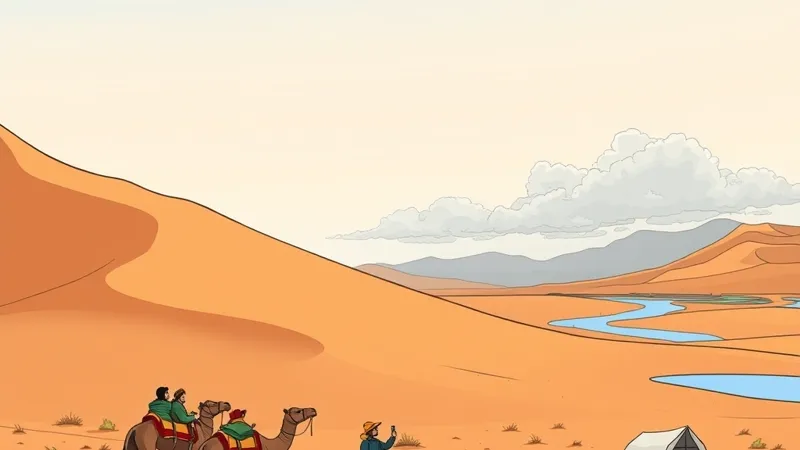
Blowing sand can reduce visibility, rain can affect roads and camps, and wind can delay or replace camel rides and outdoor activities in Merzouga. What happens to your tour depends on local conditions, the route and the operator’s safety decisions—not simply whether a weather app shows sunshine.
The journey from Marrakech is roughly 560 km and about 9–10 hours by road, crossing the Tizi n’Tichka pass at 2,260 m. A Marrakech departure therefore does not guarantee access to Erg Chebbi: mountain roads, desert approaches and the camp’s final access track can face different conditions. Weather-related changes also do not give every booking the same refund entitlement. Check the terms for individual activities, camp substitutions and cancellation of the whole tour separately.
How can sandstorms, rain and wind affect your Merzouga desert tour?
Weather can change both the journey and what you do after arrival. A tour may continue with a revised overnight stay while a dune activity is postponed or removed.
Use this hazard–impact–action summary alongside the Moroccan General Directorate of Meteorology’s forecasts and warnings:
- Blowing sand: reduced visibility and uncomfortable exposure can interrupt camel rides or photography. Stay with the group and follow instructions about shelter.
- Strong wind: exposed activities may be shortened, delayed or replaced. Ask what alternative is included and whether reaching it is safe.
- Rain and runoff: road crossings and camp tracks may become unsuitable. Accept an access reassessment rather than assuming a different vehicle solves the problem.
- Cold or heat: an otherwise accessible camp may be uncomfortable without suitable bedding or temperature control. Confirm facilities before booking.
A changed itinerary is not necessarily a canceled holiday. Equally, keeping the main tour running does not mean every advertised activity remains appropriate.
When are wind, rain and temperature changes most relevant in Merzouga?
Summer heat and winter nighttime cooling are important planning concerns, but no season guarantees freedom from wind, blowing sand or rain. Seasonal climate describes typical conditions; it does not predict the weather for your departure.
A compact seasonal overview is more useful than unsupported station-level precision:
- Winter: January is approximately 19°C by day and 6°C at night (around 43°F), with colder conditions possible on the dunes. Warm layers and bedding matter after sunset.
- Spring: prepare for changing temperatures and possible wind or blowing sand. A comfortable temperature forecast does not establish suitable conditions for dune activities.
- Summer: July daytime temperatures often exceed 40°C and can pass 45°C on the sand. Ask about activity timing, shade and cooling rather than assuming heat is merely an inconvenience.
- Autumn: daytime warmth can coexist with cooler evenings. Rain remains possible, so retain lightweight waterproof protection and check access conditions.
These temperature pointers are not a complete station-based climate table. Monthly rainfall totals in millimeters, station elevation and climate reference periods should only be compared when they come from an identified dataset. They cannot establish a Merzouga-specific probability of a sandstorm or flooded track.
The World Bank Climate Change Knowledge Portal’s Morocco page provides broader climate context. National averages are not Merzouga measurements; an Errachidia station series would also need explicit labeling as a proxy, including its location, elevation and reference period. For an individual trip, prioritize the approaching forecast over a seasonal summary.
What is the difference between windy dunes, blowing sand and a sandstorm?
Windy dunes are not automatically experiencing a sandstorm. The practical distinction is whether particles are being lifted and transported, how much visibility changes and how exposure affects people.
- Windy dunes: moving air may disturb loose surface sand without substantially obscuring the surroundings.
- Blowing sand: wind carries sand into the air, potentially affecting eyes, exposed skin, equipment and visibility.
- Sandstorm or dust storm: airborne material can make conditions substantially more difficult, although particle size, concentration and local effects vary.
These are plain-language descriptions, not formal visibility classifications. The WMO Sand and Dust Storm Warning Advisory and Assessment System provides scientific context for monitoring and forecasting airborne sand and dust.
For travelers, the label matters less than the conditions. A camel ride may be uncomfortable or unsuitable before visibility becomes severely restricted. Sand can enter camera mechanisms, while distant landmarks may become harder to distinguish when driving. There is no single wind-speed cancellation threshold that should be assumed to apply to every Merzouga operator, activity or route.
Which forecasts and weather warnings should you check before departure?
Check Moroccan forecasts and warnings several days before departure, again the day before, and with your operator before entering the dunes. This is a sensible planning routine, not a guarantee that forecasts will capture every local change.
Cover the whole itinerary: Marrakech, the High Atlas crossing, Ouarzazate, the Dades or Tinghir area where relevant, and Merzouga. Ask which locations and access tracks the operator is assessing rather than requesting only a general desert forecast.
Keep three kinds of information separate:
- Official meteorological warnings: DGM information describes weather hazards and their geographic coverage.
- Modeled dust forecasts: the WMO-associated Barcelona Dust Regional Center provides information about predicted atmospheric dust, not permission to travel on a particular road.
- Local operational assessment: the operator must consider the actual route, vehicle transfer, camp access and planned activity.
A phone icon does not show whether a crossing has been affected by runoff. A dust-model map likewise cannot establish whether a road is open or a specific camel route is suitable. If information conflicts, ask the operator to explain the proposed plan and alternatives before proceeding.
What should you do if wind or blowing sand starts during a dune activity?
Follow the guide’s instructions, remain with your group and move to suitable shelter when directed. Do not continue toward a sunset viewpoint or attempt an independent walk back because the camp appears nearby.
Protect your eyes with well-fitting eyewear and put away loose equipment. Avoid opening bags unnecessarily, and do not prioritize saving photographs over following instructions. If breathing becomes difficult or you feel unwell, tell the guide promptly.
The World Health Organization’s sand and dust storm guidance explains the health relevance of airborne particles. A scarf is not equivalent to a properly fitted particulate respirator, and neither face covering nor eye protection makes continuing an exposed activity safe.
Travelers with asthma or other respiratory conditions should seek individualized medical advice before travel. Keep prescribed medication accessible in sealed storage rather than buried in luggage left in the vehicle. Discuss exposure concerns with the operator beforehand, including whether a sheltered alternative can be reached without crossing exposed terrain.
Can rain cause flooding or prevent access to an Erg Chebbi camp?
Yes. Rain and runoff can affect dry channels, low-lying tracks and road crossings, including when the rain falls away from the immediate campsite. Conditions must be assessed for the particular camp and its approach route.
An inconvenient shower does not automatically make a camp inaccessible. The more important questions are where water is flowing, what the crossing conditions are and whether safe access and exit remain available.
Possible responses include delaying a transfer, staying in accessible accommodation or canceling the dune segment. A vehicle transfer is an alternative only when its route is suitable: a 4x4 does not make floodwater safe to cross.
Check DGM warnings and the UK government’s Morocco travel advice for relevant weather and travel guidance. Follow local restrictions and the operator’s revised plan rather than trying to judge water depth or road condition yourself.
Ask how an accommodation substitution would work financially. A safer overnight location does not necessarily offer the same facilities, setting or room arrangement as the booked camp, and those differences should be explained.
How can weather change the Marrakech to Merzouga journey?
Mountain weather can disrupt a desert tour even when Merzouga is clear. The usual corridor crosses the High Atlas via Tizi n’Tichka, continues through Ouarzazate and southeastern Morocco, and reaches Merzouga after itinerary-dependent stops around Dades or Tinghir.
For planning, distinguish the overall drive from a staged tour:
- Marrakech to Merzouga overall: roughly 560 km and about 9–10 hours by road. This is an approximate road-travel baseline, not a promised transfer duration; allow separately for sightseeing, meals and weather delays.
- High Atlas crossing: mountain conditions can influence progress before the vehicle reaches the drier southeast. Check the pass and connecting roads, not only the destination forecast.
- Ouarzazate through the Dades or Tinghir area: overnight stops and sightseeing detours change the distance and daily schedule. Request the actual itinerary rather than applying the direct-drive estimate to each tour.
- Merzouga to the camp: the final access arrangement is camp-specific and may involve an exposed track or dune activity. Main-road arrival does not establish camp access.
The Moroccan Ministry of Equipment and Water is an official source for road information. Its inclusion here does not imply that any road is currently open.
A multi-day itinerary spreads sightseeing and overnight stays across the journey; it does not remove the long driving commitment. Our Marrakech-to-Sahara transport guide explains the broader journey-planning choices.
What should you pack for wind, rain and cold nights in Merzouga?
Pack for exposure and changing temperatures, not just a sunny afternoon photograph. Daytime warmth does not establish overnight comfort, particularly in winter.
Bring:
- Layered clothing, including a warm layer for evenings.
- A wind-resistant outer layer and lightweight rain protection.
- Closed shoes suitable for sand and uneven ground.
- Well-fitting eye protection and sunscreen.
- Sealed storage for electronics, documents and medication.
- Essential prescribed medication within easy reach.
For more detail, use the Sahara desert packing guide.
A camp described as luxury does not automatically confirm heating, cooling, waterproofing or backup power. Budget camps may be basic, but facilities need checking at every price level. Ask whether heating serves individual tents, what bedding is provided and whether sheltered communal space is available.
Also ask how far the tent is from the vehicle drop-off and what transfer is possible if walking or camel riding becomes unsuitable. A sheltered tent is not a complete contingency plan if reaching it requires an unsafe exposed journey.
What should you ask before booking a weather-sensitive desert tour?
Ask for the weather-change and cancellation terms in writing before paying. The key issue is what happens to your particular booking when an activity, camp or road becomes unavailable.
Compare these points:
- Who decides when a camel ride or dune activity stops?
- Can camel riding be replaced, and under what conditions?
- What accommodation may replace the booked camp?
- What happens if a road closure prevents reaching Merzouga?
- Who pays for additional accommodation, meals or transport?
- What assistance is offered if the return is delayed?
- How are missed onward connections handled?
- Which terms cover a missed activity, a substituted stay and full-tour cancellation?
A sheltered stay or vehicle transfer may be possible, but neither should be promised regardless of conditions. Leave flexibility before a fixed flight; no single buffer is sufficient for every weather event or itinerary.
Via Sahara is an independent editorial and affiliate comparison guide, not a tour operator, and has no guides of its own. We may earn a commission through affiliate links. Prices and ratings are shown in live GetYourGuide widgets on relevant tour pages rather than fixed in this article.
With the weather questions above in hand, compare Marrakech-to-Merzouga three-day tours and examine each listing’s inclusions and cancellation terms before choosing.
What else should travelers know about Merzouga weather disruptions?
Weather-related decisions remain specific to the departure, activity and booking. These answers summarize the practical distinctions to keep in mind.
Can Merzouga sandstorms be predicted precisely?
Forecasts can indicate conditions favorable for airborne dust and sand, but they cannot guarantee the exact timing or intensity at your Erg Chebbi activity location. Use DGM warnings, dust forecasting resources and the operator’s local assessment together. Recheck before entering the dunes rather than relying on an earlier screenshot.
Does rain always cancel a tour, and can camel rides be replaced?
Rain does not always cancel a Merzouga tour: access and activity conditions determine the response. A camel ride might be delayed or replaced with a suitable sheltered stay or vehicle transfer, but only if conditions permit. Check whether the proposed alternative is included and how it changes the itinerary.
Do Erg Chebbi camps have heating?
Some camps may offer heating, but it should never be assumed from a luxury label or photographs. Ask about your specific tent, overnight availability, bedding and backup power. Merzouga’s daytime temperature is not a reliable guide to sleeping comfort, so carry layers even when the afternoon forecast looks mild.
Does a missed activity qualify for a refund?
A missed Merzouga camel ride does not automatically carry the same refund terms as cancellation of the entire tour. The outcome depends on the booking conditions and applicable consumer protections. Keep the advertised inclusions and written explanation of changes, then raise any refund request through the channel specified in your booking.
Is a Marrakech forecast enough for a Merzouga tour?
No. A Marrakech forecast does not describe conditions at the High Atlas crossing, along southeastern roads or at an Erg Chebbi camp. Check route, dune and camp conditions separately. As explained above, clear weather at either end cannot establish that every road crossing and final camp approach is accessible.
Sources
These resources serve different purposes: forecasts and warnings support departure planning, climate information describes longer-term patterns, and health and road guidance address separate risks. They are not a statement of live conditions or confirmation that a particular tour will operate.
- Morocco’s General Directorate of Meteorology: Moroccan forecasts and weather warnings; check issue times, validity periods and affected areas.
- WMO SDS-WAS: scientific context for sand and dust monitoring and forecasting. The associated Barcelona Dust Regional Center provides modeled dust products.
- World Health Organization: health context for sand and dust exposure.
- World Bank Climate Change Knowledge Portal: Morocco: climate context; check geographic coverage, units and baseline before comparing datasets.
- Morocco’s Ministry of Equipment and Water: official road information. The UK government’s Morocco travel advice provides complementary traveler guidance.
For itinerary inclusions, camp facilities and refunds, the relevant evidence is the specific listing and your booking terms—not a meteorological or health source.