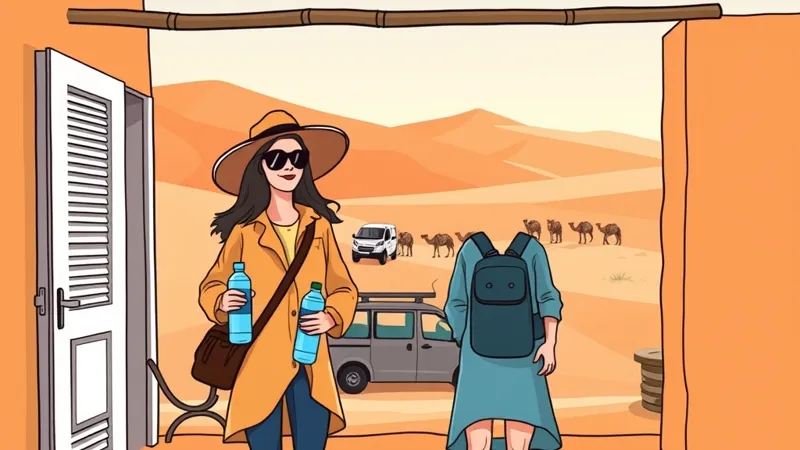
A Marrakech–Merzouga Sahara tour is possible in July and August, but it is not our default recommendation if you can choose cooler dates. July daytime temperatures in Merzouga often exceed 40°C. Marrakech to Merzouga is roughly 560 km and about 9–10 hours by road before substantial sightseeing stops. Extreme daytime heat, long transfers and potentially hot sleeping conditions are meaningful drawbacks—not minor inconveniences.
Consider summer only if you accept those limitations and confirm reliable vehicle air conditioning, suitable cooled accommodation and minimal outdoor activity during peak heat. These precautions reduce exposure; they do not eliminate heat-related illness. If those arrangements remain vague, postpone or change the route.
Via Sahara is an independent editorial and affiliate comparison guide, not a tour operator. We do not run tours or employ the guides who deliver them.
How hot is Merzouga in July and August, including overnight?
Both months require a heat-conscious plan, and neither should be booked on the assumption of cool nights. Temperatures above 40°C are a relevant summer planning concern, not a forecast for every day.
A useful month-by-month distinction is:
- July: daytime temperatures often exceed 40°C. Conditions on sun-exposed sand can pass 45°C, but this is not a standardized shaded-air measurement or a monthly average.
- August: keep the same cooling requirements rather than assuming a meaningful improvement. The weather during your particular visit matters more than a small difference between monthly averages.
- Overnight in either month: do not assume a tent will become comfortable after sunset. Ask about cooling during the entire sleeping period, not simply whether air conditioning is installed.
Climate averages describe a reference period; they do not show how hot a particular heatwave will become. A monthly average low also does not describe the temperature inside a tent at bedtime. Direct sunshine and hot surfaces add to the heat your body experiences beyond a shaded-air reading.
For climate information, use Morocco’s Directorate General of Meteorology and the WMO World Weather Information Service. Any numerical comparison should identify the station, elevation and reference period. A nearby station is a proxy, not a measurement at your Erg Chebbi camp; Marrakech data should not stand in for Merzouga. No station-specific monthly averages are quoted here.
How far is Merzouga from Marrakech, and how long are summer transfers?
Marrakech to Merzouga is roughly 560 km, about 9–10 hours by road, crossing the Tizi n’Tichka pass at 2,260 m. These are route-dependent planning estimates, not guaranteed door-to-door transfer times: confirm the actual route on a current map and allow extra time for stops.
A typical three-day trip divides the outward journey but leaves a long return day. The following is an illustrative route, not a supplier itinerary:
- Day one: Marrakech to the Dades area; overnight there. About 6–7 hours of driving, depending on the accommodation and route. Sightseeing, meals and toilet breaks extend the day. Confirm vehicle cooling throughout the journey and a cooled lunch stop.
- Day two: Dades area to Merzouga; overnight in a camp or hotel. About 4–5 hours of driving, depending on detours. Gorge visits and lunch add time. Confirm where you can wait indoors before any dune activity.
- Day three: Merzouga to Marrakech; overnight in Marrakech. Roughly 560 km and about 9–10 hours by road before substantial stops. Ask for the planned breaks, passenger cooling arrangements and expected arrival window.
These rounded leg estimates need map confirmation against the actual overnight addresses. A broken air-conditioning system is not a small detail on this route, especially if replacement transport is difficult to arrange.
A four-day itinerary can split the return with another overnight around Ouarzazate or elsewhere along the route. That reduces rushing, provided the extra day genuinely shortens driving stretches rather than adding detours. It does not reduce desert temperatures.
Our three-day Marrakech–Merzouga comparison helps frame itinerary differences. Merzouga is the gateway to Erg Chebbi’s dunes; Zagora is a different desert destination, and Agafay is a rocky desert landscape near Marrakech. Neither is an interchangeable version of Erg Chebbi.
Who should consider postponing a summer Sahara tour?
Travelers who are more vulnerable to heat should consider cooler dates, especially when cooling or medical access is uncertain. Age or a diagnosis alone is not an automatic prohibition, but the journey deserves an individualized assessment.
Young children, older adults, pregnant travelers and people with certain chronic conditions or medications can face additional heat-related risks. The WHO heat-and-health guidance explains why vulnerability varies with health, exposure and access to protection.
Ask a clinician for advice where appropriate, particularly if you have heart or kidney disease, take medication affecting heat tolerance, or have fluid restrictions. Do not stop or change medication without professional guidance.
Little walking does not necessarily mean little exposure. Waiting beside a vehicle, sitting through a long transfer without effective cooling and sleeping in a hot tent can all limit your ability to recover. Choose another itinerary if dependable cooling and suitable assistance cannot be arranged.
Will a desert camp have reliable air conditioning?
“Luxury camp” does not guarantee air conditioning, continuous electricity or a cool sleeping environment. A private bathroom and decorative furnishings tell you little about summer suitability.
A fan moves air; it is not refrigerated cooling. Likewise, a cooled dining room does not establish that your booked tent will be cool overnight.
Request written confirmation of:
- The exact tent or room category, including whether cooling is inside it.
- Whether the system is refrigerated air conditioning rather than a fan.
- Operating hours, including overnight and during midday rest.
- The power source, any scheduled interruptions and backup arrangements.
- Whether you can access the accommodation before the usual afternoon arrival.
- Shaded waiting areas and a genuinely cooled indoor refuge.
- Safe drinking-water availability and any additional charges.
- The alternative accommodation or transport offered if cooling fails.
An overnight camp is not essential to visiting the dunes. A Merzouga hotel with confirmed room cooling, combined with a short weather-dependent dune excursion, may provide a more controllable base. Check the individual property: not every hotel has reliable cooling either. Our Merzouga accommodation guide is a starting point, not a guarantee of a particular room’s conditions.
What should a heat-conscious summer itinerary look like?
A sensible summer day puts rest and access to cooled indoor space ahead of completing activities. Dawn or late afternoon may offer better conditions than midday, but neither is automatically safe.
An example arrangement is:
- Near dawn: an optional short dune visit, only if conditions and everyone’s health allow it.
- After breakfast: return to cooled accommodation rather than extending the outing because it is already booked.
- Hottest part of the day: remain in a genuinely cooled indoor room, with drinking water and minimal exertion. Shade alone may be inadequate during extreme heat.
- Late afternoon: reassess the forecast, local conditions and how everyone feels before deciding whether to go out.
- Evening: keep cooling available; sunset does not immediately remove heat risk.
Consult Morocco’s Directorate General of Meteorology for forecasts and warnings. Make the schedule conditional on those conditions, not on a promised sunset photograph.
A camel ride still means sustained exposure, even though you are sitting down. A shorter 4×4 transfer can reduce exposure, but it is not inherently safe or necessarily air-conditioned. Confirm the actual vehicle and waiting arrangements.
Shorten, replace or cancel dune activities when appropriate. Agree beforehand that staying indoors is an acceptable outcome—not a failure to complete the tour.
What should you pack and drink?
Pack for sun protection and reliable water access, but do not treat equipment or hydration as substitutes for cooling. The CDC’s travel heat guidance emphasizes limiting exposure and exertion alongside hydration.
Bring:
- Loose, breathable clothing that covers exposed skin.
- A broad-brimmed hat, sunglasses and sunscreen, used according to its instructions.
- Suitable footwear for hot ground; avoid barefoot walking on sand.
- Refillable water containers that are easy to reach during transfers.
- A clear plan for safe drinking-water replenishment at road stops, accommodation and activities.
- Personal medicines, stored according to their temperature requirements.
Ask whether water is available throughout the journey, not just at dinner. Carry accessible water rather than leaving everything in luggage that cannot be reached between stops.
There is no universal daily water volume appropriate for every traveler. Needs vary with body size, conditions, exertion and health; travelers with fluid restrictions need personalized advice. Prolonged heavy sweating can also require electrolyte replacement, but supplements and salt tablets are not a default solution for everyone.
Minimize exertion and alcohol. Drinking water alone does not prevent heatstroke, particularly when the body cannot shed heat or someone remains in a hot environment.
What should you do if someone develops heat illness?
Stop activity and start cooling if someone becomes unwell in the heat. Confusion, collapse or seizures require immediate emergency assistance rather than waiting to see whether drinking water helps.
Health box: possible heat exhaustion versus an emergency
- Possible heat exhaustion: headache, nausea, dizziness, weakness, thirst and heavy sweating. Move the person into air conditioning or the coolest available place, remove unnecessary clothing and cool the skin with water and airflow. Offer cool fluids only if they are fully alert and able to swallow. Stay with them and seek medical help if symptoms are severe, worsen or do not improve promptly.
- Possible heatstroke: confusion, poor coordination, collapse, seizures or loss of consciousness in a heat-exposed person. Heatstroke can occur even when someone is sweating. Seek emergency assistance immediately and begin prompt cooling while help is arranged.
- Do not give fluids to someone who is confused or unconscious. Do not leave them alone or delay assistance while trying to complete the transfer.
See the NHS heat exhaustion and heatstroke guidance for recognition and first aid. Symptoms can overlap; you do not need diagnostic certainty to seek urgent help.
Before departure, confirm how the operator communicates when mobile coverage is limited, how evacuation would work and which appropriate medical facility would be used. Do not assume rapid access simply because a tour is organized.
What should you confirm before paying?
Choose by documented summer arrangements, not by the lowest price or a premium label. Basic camps may offer limited facilities, while expensive camps can still have cooling restrictions.
Compare written answers on:
- Vehicle air conditioning, including rear seats, and the plan if it fails.
- Daily driving duration, sightseeing time and cooled rest stops.
- Exact accommodation, booked category and cooling hours.
- Water inclusions and replenishment opportunities.
- Whether camel rides can be skipped and what replaces them.
- Group size and flexibility if someone needs to stop.
- Communication, evacuation and medical-facility arrangements.
- Cancellation, refund and substitution terms for heat-related changes.
A private trip can offer more control over timing, but does not guarantee appropriate cooling or emergency support. Shared trips may have less flexibility around individual needs.
GetYourGuide widgets on Via Sahara’s tour pages display current prices, availability and ratings. Those details should be checked live; none establishes whether a particular summer departure meets your requirements.
When is a better time to visit, and what if summer dates are fixed?
Spring and autumn are generally better starting points for travelers avoiding peak summer heat, though hot spells remain possible. Winter brings colder nights rather than a guarantee of comfort throughout the day and evening.
Use meteorological information for climate comparisons. Morocco’s official tourism board, Visit Morocco, is useful for destination context, not a substitute for weather evidence or warnings.
If July or August is your only option, consider three alternatives:
- Omit the desert: spend the available days elsewhere rather than adding a demanding return journey.
- Use confirmed cooled accommodation in Merzouga: make a short dune visit optional and weather-dependent, without committing to sleeping in a camp.
- Choose a coastal itinerary: consider destinations such as Essaouira, while still checking local forecasts and room cooling rather than assuming every coastal stay is comfortable.
Agafay and Zagora are not automatically cool alternatives. A shorter journey can reduce travel fatigue without removing heat exposure.
If the cooling, transfer and cancellation arrangements fit your needs, use our Sahara tour comparison to narrow the options before requesting written confirmation. Affiliate disclosure: Via Sahara may earn a commission if you book through GetYourGuide links or widgets on linked pages.
What else should you know before booking?
The key is whether your specific departure has workable cooling and flexibility—not simply whether summer tours are sold.
Is August cooler than July, and are summer desert nights cold?
Do not count on August being meaningfully cooler for your trip, or on cold nights in either month. Monthly climate patterns cannot predict a heatwave or the temperature inside your accommodation. Check official forecasts and confirm overnight cooling.
Do Merzouga desert camps have air conditioning?
Some may, but it is not guaranteed by the word “luxury.” Confirm refrigerated cooling in your exact tent, operating hours, backup power and the alternative if the system fails.
Can you skip the camel ride?
Often an alternative can be arranged, but confirm before paying. Ask about its cost, duration, actual vehicle cooling and waiting conditions. Staying at the accommodation should remain an option if conditions are unsuitable.
Is a three-day Marrakech itinerary too rushed in summer?
It can be, especially if you dislike long road days. The return alone is roughly 560 km and about 9–10 hours before substantial stops. An extra overnight can reduce rushing, but does not make the desert cooler.
Should children join a summer Sahara tour?
Not automatically: assess the child’s needs and the actual arrangements. Young children need particular consideration, and reliable cooling, water access and medical support matter more than minimal walking. Seek individualized advice where appropriate; the WHO guidance linked above explains heat vulnerability.
Sources
Official weather and health resources serve different purposes from route estimates and supplier promises. No station-specific climate-normal dataset or editorial access date is claimed here.
- Morocco’s Directorate General of Meteorology: official weather information, forecasts and warnings.
- WMO World Weather Information Service: official city weather and climate information; check station applicability and reference periods.
- WHO: Climate change, heat and health: heat exposure, vulnerability and health protection.
- CDC: Heat illness: travel-related prevention and hydration guidance.
- NHS: Heat exhaustion and heatstroke: symptoms, emergency warning signs and first aid.
Road distances and driving times are rounded planning estimates requiring current map confirmation. Cooling, water provision and emergency arrangements require written confirmation from the supplier for the actual departure.