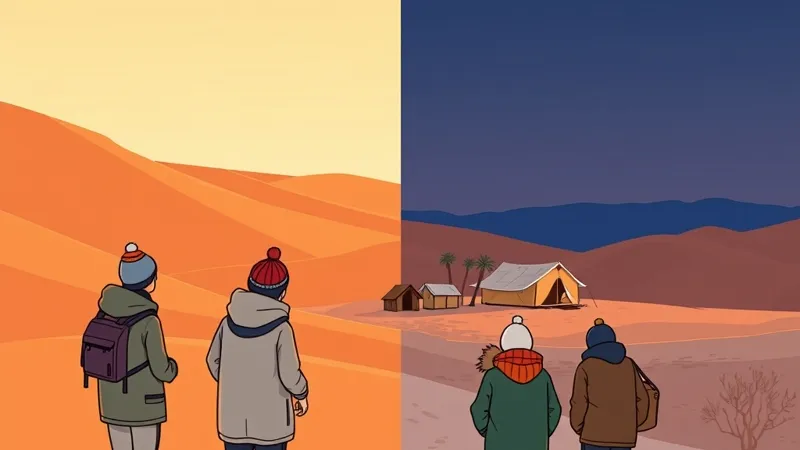
Winter in the Sahara near Merzouga brings potentially warm sunny afternoons, cold evenings and nights that may approach or fall below freezing. January’s indicative temperatures are around 19°C by day and 6°C at night, with colder conditions possible on the Erg Chebbi dunes. Neither afternoon warmth nor overnight frost is guaranteed. Outside holiday peaks, some dune areas can feel quieter, but Christmas and New Year are important exceptions.
For a December–February visit, pack layers, confirm exactly how your sleeping tent is heated and allow enough travel time from Marrakech: roughly 560 km and 9–10 hours by road, before sightseeing stops or winter delays.
Via Sahara is an independent editorial and affiliate comparison guide, not a tour operator. We compare trips sold by other providers; we do not operate camps, vehicles or guiding services.
What is the Sahara near Merzouga like from December to February?
December through February can suit travelers who prefer cooler sightseeing conditions and can prepare for cold nights. The main practical challenge is the contrast between sitting in sunshine and staying comfortable after sunset.
A sheltered afternoon may feel pleasant in light layers. On an exposed dune, wind can make the same air temperature feel much colder, especially when you stop walking. An unheated tent may offer shelter without providing the indoor warmth you associate with a hotel bedroom.
Winter is therefore less about choosing one perfect month and more about matching the itinerary, accommodation and clothing to the forecast. Quieter surroundings are a possible benefit, not a promise attached to every winter departure.
How warm are the days and how cold are the nights in winter?
Expect a substantial difference between daytime comfort and overnight conditions. The January guide of about 19°C by day and 6°C at night is an orientation figure, not a guaranteed forecast or a station-specific climate-normal table.
For a practical month-by-month approach:
- December: prepare for cold evenings and overnight stays; a sunny afternoon does not establish how warm the tent will be.
- January: use the indicative figures above as broad context, while allowing for colder nights on the dunes and possible freezing conditions.
- February: retain the same cold-night equipment rather than assuming that the end of winter removes the need for it.
Monthly average daytime maxima and nighttime minima describe a climate record, not the warmest afternoon or coldest night you might encounter. A cold spell can fall well outside the experience suggested by an average. Air temperature is also different from perceived warmth: sunshine, wind, clothing and activity all affect comfort.
Errachidia station observations are regional proxies, not measurements from an Erg Chebbi camp. Any climate comparison using them needs the reporting station, elevation and climate-normal period, with temperatures in °C and precipitation in mm. Do not treat a regional monthly rainfall average as a prediction for your overnight stay.
For travel decisions, check a short-range forecast for the Merzouga area through Morocco’s meteorological service, including overnight lows and wind. Check the mountain section of your route separately: desert weather alone cannot tell you whether the journey will be straightforward.
Are the dunes quieter in December, January or February?
Ordinary winter weekdays may offer quieter conditions than holiday departures, but the calendar alone cannot predict how busy your particular dune route will feel. Christmas, New Year and relevant international school holidays deserve separate consideration.
January after the festive period is worth comparing with New Year if your dates are flexible. February school breaks can also overlap with travel demand; check the calendars relevant to your departure market rather than assuming the whole month is quiet.
Location and timing matter just as much as the month. Several camps can share a sunset area, camel departures can converge, and motorized excursions can change the atmosphere even when few people are walking nearby.
Before booking, ask:
- Where is the camp relative to other camps and vehicle tracks?
- Which dunes are used for sunset excursions?
- Can the provider suggest a quieter walking route?
- Are quad-bike or other motorized routes nearby?
Treat quieter dunes as a planning possibility, not a measured seasonal trend or a guarantee of empty sand.
How long does it take to reach Merzouga from Marrakech in winter?
The Marrakech–Merzouga journey is roughly 560 km and 9–10 hours by road, excluding stops, on the route over the High Atlas through Ouarzazate and southeastern Morocco. Exact distance and timing depend on the selected roads, accommodation and sightseeing detours.
The commonly used Tizi n’Tichka pass reaches 2,260 m. Snow, ice and shorter daylight can disrupt a winter schedule, so a normal driving estimate should not become a promised arrival time.
Use these route-specific planning comparisons:
- Direct Marrakech–Merzouga transfer via Tizi n’Tichka and Ouarzazate: roughly 560 km; about 9–10 hours of driving before stops. Practical elapsed time is longer with breaks, collection arrangements and road conditions. No intermediate overnight is built into a direct transfer.
- Three-day Marrakech–Merzouga–Marrakech trip: the outward journey is commonly divided by an intermediate overnight, followed by a desert overnight. The return can require a long driving day. Confirm the actual overnight locations and route; sightseeing detours change the total distance.
- Four-day round trip: the extra night can divide the return or create more time around Merzouga. It does not automatically mean an additional night beside Erg Chebbi, so inspect the daily itinerary rather than relying on the trip title.
A three-day trip is feasible but transport-heavy. Four days can reduce the pressure if the extra time is allocated usefully; neither format eliminates the long road journey.
Consult the Ministry of Equipment and Water for official road-information channels, alongside meteorological alerts. These are checking resources, not confirmation that the pass is currently open or clear. Our guide to reaching the Sahara from Marrakech provides broader route-planning context.
How can you choose a desert camp that is comfortable on cold nights?
Choose a winter camp by its confirmed facilities, not by the word “luxury.” A private bathroom, decorative furnishings or a large tent does not establish that the sleeping area is heated.
Request written answers to this checklist:
- Sleeping-tent heating: is there heating inside your specific bedroom, or only in the dining tent?
- Operating hours: does it run overnight, only during dinner or for limited periods?
- Electricity: is power continuous, generator-based or restricted? Are personal electrical appliances prohibited?
- Bedding: what duvets and blankets are provided, and can extra blankets be reserved?
- Floor insulation: is there insulation beneath the sleeping area rather than only a thin surface covering?
- Hot water: when is it available, and are there limits affecting evening or morning showers?
- Bathroom access: is the bathroom inside the tent or reached by walking outdoors?
- Changes: will the same winter provisions apply if the provider substitutes another camp?
Budget accommodation may be basic, but price labels alone are not enough to judge warmth. A precise facilities description is more useful than an accommodation category.
Do not use unvented fuel-burning heaters, charcoal or camping stoves inside an enclosed tent. Carbon monoxide can accumulate without an obvious warning smell; see the CDC’s carbon monoxide guidance. Ask about safe installed heating rather than improvising your own.
What should you pack for a winter Sahara overnight stay?
Pack a flexible layering system for daytime sightseeing, exposed sunset activities and sleeping. A light daytime outfit alone is inadequate after sunset, and daytime temperatures do not indicate how comfortable an unheated bedroom will be.
For daytime sightseeing:
- Breathable base layers and comfortable trousers.
- A fleece or wool layer that is easy to add or remove.
- Closed shoes suitable for walking on uneven ground.
- Sunglasses, sunscreen and lip balm.
- Personal medication carried where you can access it during transfers.
For sunset excursions:
- An insulated jacket.
- A wind-resistant outer layer, if your jacket does not provide enough protection.
- A warm hat, gloves and warm socks.
- A small bag so layers remain with you rather than in a vehicle or transferred suitcase.
For sleeping:
- Dry base layers reserved for bed.
- Warm socks and a comfortable extra layer.
- A headlamp for tent entrances or outdoor bathroom paths.
- A sleeping bag only if the confirmed bedding and forecast make one appropriate.
Do not assume a thin sleeping-bag liner replaces adequate bedding. If a camp cannot explain its winter provisions, resolve that before departure rather than expecting clothing alone to compensate.
When should you plan camel rides, dune walks and stargazing in winter?
Schedule activities around local daylight, wind and the forecast, not a fixed year-round departure time. For independent daytime walks, leave a return buffer before dark; for sunset excursions, ask how the return after sunset is organized.
Compare each option by actual exposure and physical demands:
- Walking: you can often adjust your pace, but loose sand and dune slopes require effort. Confirm distance, terrain and the return arrangement.
- Camel rides: ask about riding duration, mounting assistance and alternatives. Sitting still in wind can feel colder than walking, and riding is not comfortable for everyone.
- Vehicle transfers: these can reduce time exposed outdoors, but clarify the collection point, access arrangements and whether any walking remains necessary.
Wind can change plans, and a provider should be able to explain alternatives without promising every activity will run.
For stargazing, look beyond the season. Cloud, airborne dust, moon phase and nearby camp lights all affect visibility. A bright moon can illuminate the dunes while making faint stars harder to see; NASA’s explanation of lunar phases provides useful background. Keep a warm layer available and choose a short session if standing still becomes uncomfortable.
How should you compare winter Sahara tours from Marrakech?
Compare the daily itinerary and written inclusions before comparing the headline price. The most useful winter distinctions are driving time, actual time near Erg Chebbi and the sleeping arrangements.
Check each listing for:
- Three versus four days: where does the additional time go, and how long is the final drive?
- Shared versus private transport: what flexibility exists for breaks, departure times and weather-related changes?
- Accommodation location: is the overnight in Merzouga, near the dune edge or at a desert camp?
- Actual desert nights: how many nights are spent near Erg Chebbi rather than along the route?
- Heating and bedding: do written inclusions match the camp’s answers?
- Meals: which meals and drinks are included, and can dietary needs be accommodated?
- Transfers: how do you reach the camp, and what happens to your luggage?
- Activities: what is the actual walking or riding duration, rather than the total excursion window?
- Weather disruption: what happens if roads, transfers or activities cannot operate?
Our private versus shared tour comparison explains the transport trade-offs. Private transport may offer flexibility, but it cannot guarantee access through a weather-affected mountain pass.
Affiliate disclosure: Via Sahara may earn a commission from bookings made through affiliate links or widgets. Consult the live GetYourGuide widgets on relevant comparison and tour pages for current prices, availability and ratings. The listed provider operates the trip; Via Sahara does not guarantee its services.
What winter travel checks should you make before departure?
Check the mountain journey, desert forecast and booked facilities separately before setting out. A favorable forecast in Merzouga does not establish safe conditions across the Atlas.
- Review official mountain-road information and weather alerts.
- Check Merzouga’s overnight forecast and wind, not just the afternoon maximum.
- Reconfirm pickup, luggage handling and the final camp transfer.
- Keep written confirmation of heating, bedding and bathroom arrangements.
- Read insurance terms for your activities, medical needs and travel disruption.
- Check cancellation, substitution and refund provisions for weather changes.
- Avoid a return schedule that leaves little room before an onward flight.
For children, older travelers and anyone sensitive to cold, prioritize reliable warmth, convenient bathroom access and manageable travel stages. Winter is not universally unsuitable, but needs differ. Seek individualized medical guidance if a health condition could affect tolerance of cold, prolonged sitting or the planned activities.
The UK’s Morocco travel advice is an example of country-specific general guidance; travelers should also consult their own government’s advice. It does not replace local road notices or short-range weather alerts.
Once your heating requirements and travel pace are clear, compare Sahara tour itineraries against that checklist rather than choosing on the headline price alone.
What do travelers ask about visiting the Sahara in winter?
Winter visits are workable with suitable clothing, accommodation and travel time. These answers distinguish typical planning considerations from conditions no provider can guarantee.
Is December a good time to visit Merzouga, and is January quieter than New Year?
December can suit travelers who want cooler daytime sightseeing and are prepared for cold nights. January outside the holiday period may feel quieter than New Year, but camp location, excursion timing and school holidays still matter. Neither month guarantees empty dunes.
Does Erg Chebbi freeze every night?
No. Nights can approach or fall below freezing, but frost is not a nightly certainty. Use the local overnight forecast and prepare for colder conditions than a broad monthly temperature guide suggests.
Are desert tents heated?
Some are, but heating is not universal and may serve only communal areas. Confirm bedroom heating, operating hours, power restrictions and extra bedding in writing. “Luxury” is not a heating specification.
Can Atlas snow affect the journey?
Yes. Snow or ice can affect the mountain route between Marrakech and Merzouga, causing delays or itinerary changes. Check official road information and weather alerts before departure, and ask the provider about its disruption policy.
Are three days enough from Marrakech?
Three days can accommodate a Merzouga round trip, but expect long driving stages and limited time at the dunes. Four days can provide a less compressed schedule if the additional night is placed usefully; check the itinerary rather than assuming it means more desert time.
Sources
Official weather and road channels support departure checks; supplier confirmations establish camp facilities, and live widgets provide current commercial information. Route estimates are planning guides, not live traffic reports.
- Morocco’s meteorological service: forecasts, weather alerts and official meteorological information.
- Morocco’s Ministry of Equipment and Water: official road-information channels.
- CDC: About carbon monoxide: carbon monoxide risks and prevention.
- NASA: Moon phases: lunar illumination background for stargazing plans.
- UK government: Morocco travel advice: general destination and travel-safety guidance.
For station-based climate comparisons, Morocco’s meteorological service and WMO climatological resources are the appropriate reference points for station names, elevations and normal periods. The Moroccan National Tourism Office provides broader destination context. Regional climate records should not be presented as measurements from a particular Erg Chebbi camp.