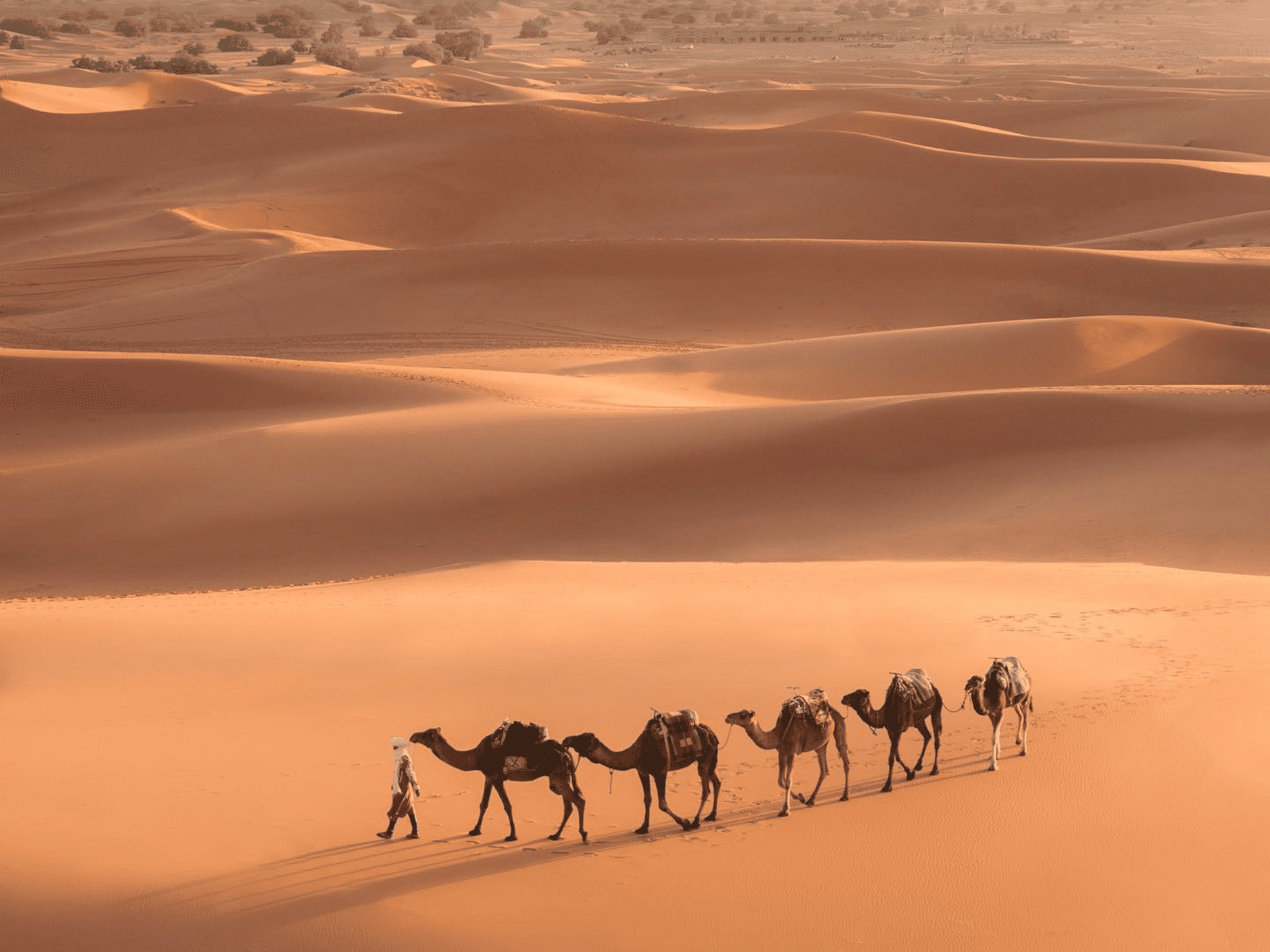
For most first-time visitors, the 3-day Sahara desert tour from Marrakech is worth it — because it is the only realistic way to reach the tall Erg Chebbi dunes near Merzouga and sleep in the deep desert without renting a car or booking a domestic flight. Marrakech to Merzouga is roughly 560 km and about 9–10 hours by road each way, over the Tizi n'Tichka mountain pass (2,260 m), so a shorter loop simply cannot get you to the real dunes and back. The 3-day format is the minimum that works.
It suits travellers who have 3 or more free days and accept two long drive days in exchange for one genuine night in a desert camp. It is a poor fit if you have only 2 days, dislike long transfers, want a relaxed pace, or are travelling with very young children or with back or motion-sickness problems. If that's you, an alternative below will serve you better. Live prices and current ratings are not fixed figures — they appear in the booking widgets on each tour page, which is where you should compare before deciding.
What does a 3-day Sahara tour from Marrakech actually include?
A standard 3-day tour is a there-and-back loop from Marrakech to Merzouga, structured around one overnight in a desert camp. The itinerary is remarkably consistent between operators:
- Day 1 — Marrakech to the Dades or Ouarzazate area. You cross the Tizi n'Tichka pass (2,260 m) through the High Atlas, stop at the earthen kasbah of Aït Ben Haddou — a UNESCO World Heritage Site — and usually pass Ouarzazate and its film studios before overnighting near the Dades Valley.
- Day 2 — Gorges to the dunes. The route continues through the Dades or Todra gorges toward Merzouga, arriving in the afternoon. Late in the day you swap the vehicle for a camel and ride into Erg Chebbi to reach camp before sunset. The dunes here rise up to about 150 m.
- Day 3 — Sunrise, then the long return. After sunrise over the sand you ride back out and begin the drive to Marrakech, retracing much of Day 1 with photo and rest stops.
What's typically bundled: transport in a minibus or 4×4, the camel trek, one night in the camp, and some meals (usually dinner and breakfast at the camp). What's usually not bundled: lunches, drinks, tips, and any extras like sandboarding or quad bikes. Because inclusions and quality vary, treat the 3-day Marrakech-to-Merzouga comparison page as your reference for what each option actually covers.
How much driving is involved, and is it too much?
The honest answer: Day 1 and Day 3 are long transit days, because Marrakech to Merzouga is about 560 km and roughly 9–10 hours one way. Over three days, more time is spent moving than standing still. Frequent photo and rest stops break it up, but you should expect two full days largely inside a vehicle.
The first leg out of Marrakech is the Tizi n'Tichka — a winding, switch-backing mountain road that climbs to 2,260 m. It is well-paved but genuinely twisty, and it is the part of the trip most likely to trigger motion sickness. If you are prone to car sickness, take a remedy before the climb rather than after symptoms start, and try to sit toward the front.
This is also exactly what the 3-day format compresses. A 4-day tour spreads the same distance across more days, cutting daily driving and adding time at the highlights. The 3-day is the efficient version — you see the same core sights, but with less breathing room between them.
What are the honest pros of the 3-day format?
The 3-day tour earns its popularity for concrete, practical reasons rather than marketing:
- It fits a short trip. Three days is the least you need to reach the real Merzouga dunes and return, so it works within a one-week Morocco holiday.
- It's the cheapest guided way to see Erg Chebbi. Shorter tours don't reach these dunes; longer ones cost more. For tall-dune access with a driver, this is the entry point.
- It packs three UNESCO-grade highlights. Aït Ben Haddou, the Atlas gorges, and the Erg Chebbi dunes — a lot of variety for the number of days.
- No self-driving stress. Someone else handles the mountain passes, navigation and long desert approach roads.
- A real night in the desert. You sleep in a camp inside the dunes, in a region with very low light pollution — a genuinely different night sky from any city.
What are the real cons, and who should skip it?
The biggest drawback is simple: roughly two-thirds of the trip is spent in a vehicle. That is the trade for reaching dunes this far from any city, and no operator can shorten the distance.
Other honest cons:
- Stops can feel rushed. With long drives bracketing each day, time at Aït Ben Haddou or the gorges is often shorter than you'd like.
- Summer heat is extreme. In July, Merzouga daytime temperatures often exceed 40 °C and can pass 45 °C on the open sand.
- Budget camps are basic. Shared bathrooms and simple bedding are normal at the lower price points; comfort scales with price.
You should consider skipping the 3-day tour, or choosing an alternative, if you have only 2 days, want to relax rather than move, travel with very young children, have back problems that make long drives painful, or strongly dislike long transfers. In those cases a shorter Zagora trip or a slower 4-day itinerary is the kinder choice.
3-day vs 2-day vs 4-day Sahara tour: which is right?
The formats reach different deserts and suit different schedules, so match the tour to your days rather than to price alone:
- 2-day tour — usually reaches only Zagora or the smaller dunes near the edge of the desert, not the tall Erg Chebbi. It's fine for a quick taste of the landscape but not for the classic big-dune experience. See the 2-day Zagora vs 3-day Merzouga comparison for the honest difference.
- 3-day tour — the minimum that reaches the real Merzouga dunes and returns to Marrakech. Best balance of access and time for most first-timers.
- 4-day tour — either ends in Fes instead of looping back (efficient if you're travelling on to the north) or keeps the Marrakech loop but spreads the driving over more days for a slower pace.
Decision rule: only 2 free days → Zagora, and accept you won't see Erg Chebbi. Exactly 3 days and you want the tall dunes → the 3-day Merzouga tour. 4+ days, or you're heading to Fes, or long drives tire you → the 4-day. If you're weighing a private car against a shared minibus, the private vs shared comparison lays out the trade-offs.
When is the best time of year to do it?
The most comfortable window is October to April, when daytime temperatures in the desert are pleasant for camel rides and walking on the sand. Summer is the hardest stretch: in July and August, Merzouga daytime highs regularly exceed 40 °C and can pass 45 °C on the dunes, and even the night camps stay warm.
Winter flips the problem. January in Merzouga sits around 19 °C by day but drops to roughly 6 °C at night — and colder still out on the open dunes, where it can fall near or below freezing. So layering matters year-round: you'll want sun protection for the day and a warm layer after dark in almost any season. For a month-by-month breakdown, the best time to visit the Sahara guide goes deeper, and the Morocco National Tourist Office publishes general seasonal guidance for the desert regions.
What should you pack and know before you go?
Pack for a wide temperature swing and for rural travel where cards aren't always accepted:
- Sun protection — high-SPF sunscreen, sunglasses, and a hat or scarf; the sand and altitude both raise UV exposure.
- A warm layer — a fleece or light jacket for desert nights, essential in winter.
- Closed shoes plus sandals — trainers for the gorges and cold mornings, sandals for the warm sand.
- Cash in dirhams — small towns and camps often have limited card acceptance; carry enough for lunches, drinks, tips and extras.
- A motion-sickness remedy — take it before the Tizi n'Tichka climb, not after.
- Modest clothing — shoulders and knees covered is respectful in rural villages.
Stay ahead on hydration: in summer heat, drink well before you feel thirsty, and remember the Tizi n'Tichka reaches 2,260 m, where the thinner, drier air adds to fluid loss. For a full list, see the Sahara packing guide.
Ready to match a specific itinerary to your dates and pace? Compare the exact inclusions, driving split and camp options on the 3-day Marrakech-to-Merzouga comparison page before you book.
Frequently asked questions
Is 3 days enough for the Sahara?
Yes, for the core experience. Three days is the minimum needed to reach the tall Erg Chebbi dunes near Merzouga, sleep one night in a desert camp, and return to Marrakech. It won't feel leisurely — two of the three days are mostly driving — but it covers the main highlights.
Can you do Merzouga in 2 days?
Realistically, no. Merzouga is about 560 km and 9–10 hours each way from Marrakech, so a 2-day tour usually reaches only Zagora or smaller dunes instead. For the tall Erg Chebbi dunes, plan on at least 3 days.
Is the camel ride mandatory?
No. The camel trek is the classic way into the camp, but most operators offer a 4×4 transfer to the tents instead, which is helpful for anyone with back or mobility issues. Confirm the option when you compare tours.
Are there private and shared options?
Yes. Shared tours run in a small group minibus at a lower price, while private tours give you your own vehicle, driver and flexible timing at a higher cost. The right choice depends on budget and how much control over the schedule you want.
Do tours run in summer?
Yes, tours operate year-round, but summer is demanding. July and August daytime temperatures in Merzouga often exceed 40 °C and can pass 45 °C on the sand, and camps stay warm at night, so heat-sensitive travellers may prefer October to April.